If you’re tired of manually adjusting your thermostat every time the temperature drops or want to cut energy costs without lifting a finger, an Alexa-compatible smart thermostat is a practical solution worth considering. These devices let you control your home’s heating and cooling from your phone, set schedules that adapt to your lifestyle, and even issue voice commands through your existing Alexa speaker. Unlike a full smart home overhaul, upgrading your thermostat is a focused, achievable project for most DIY homeowners. This guide covers what to look for, how to install one safely, and which features actually pay for themselves in energy savings.
Table of Contents
ToggleKey Takeaways
- A smart thermostat compatible with Alexa can cut heating and cooling costs by 10–15% annually while eliminating manual adjustments through voice commands and automation.
- Confirm explicit Alexa compatibility, check your home’s C-wire availability, and verify your HVAC system type before purchasing to avoid installation complications or equipment damage.
- Geofencing and machine learning features provide 5–10% additional energy savings beyond fixed schedules, but require several weeks of data collection to optimize performance.
- DIY installation is achievable for most homeowners—turn off the breaker, photograph existing wiring, connect wires to matching terminals, and position the thermostat in a central location away from drafts and heat sources.
- Start with a simple schedule (weekdays and weekends), then gradually add automations like guest overrides or seasonal adjustments to avoid troubleshooting complexity.
- Mid-range smart thermostat models deliver the best cost-to-savings ratio for most homes, paying for themselves within two years through reduced utility bills.
Why Choose an Alexa-Compatible Smart Thermostat
A smart thermostat compatible with Alexa transforms how you manage home climate control. Instead of walking to your wall unit or fumbling with a plastic dial, you can say “Alexa, set the temperature to 72 degrees” from anywhere in your home, or from your phone when you’re away.
The real payoff is energy savings. Most people leave their thermostats running at a constant temperature, even when no one’s home. According to research by leading smart home reviewers, programmable smart thermostats can cut heating and cooling costs by 10–15% annually. That translates to $100–300 per year for many households, which offsets the device cost in under two years.
Voice integration with Alexa eliminates the friction of remembering codes or unlocking an app. You adjust temperature the same way you play music or check the weather. For households with multiple people, kids, partners, guests, this simplicity means everyone actually uses the thermostat rather than arguing over manual controls.
Also, integrating your thermostat into an Alexa routine lets you automate entire scenarios. “Good night” could lower the temperature and lock your doors. “I’m leaving” could switch to away mode and reduce HVAC load. These automations happen without extra effort once you set them up once.
Key Features to Look For in an Alexa-Enabled Thermostat
Not all smart thermostats work equally well with Alexa, and some features matter far more than flashy marketing. Here’s what separates a solid upgrade from buyer’s remorse.
Compatibility confirmation is first. Check that the model explicitly supports Alexa voice control and integrates via the native Alexa app or a skill that’s actively maintained. Some older models have dormant integrations or require workarounds. Research on smart thermostat reviews shows that top-tier units from manufacturers like Ecobee, Nest, and Honeywell maintain reliable Alexa compatibility across firmware updates.
Wiring requirements matter for DIY installation. Most modern homes have a C-wire (common wire) that powers the thermostat. If yours doesn’t, some smart thermostats can run on battery backup or a proprietary power adapter, but this adds cost and complexity. Before buying, check your current thermostat’s wiring. A photo of the back plate with all wire labels visible tells you exactly what you have.
Display quality affects usability. A bright, responsive touchscreen lets you adjust temperature quickly without relying on voice or your phone. Larger screens (3–4 inches) are easier to read from across a room. Cheaper models may have dim or sluggish displays, forcing you back to your phone often.
Voice Control and Automation Capabilities
Alexa integration should feel seamless, not clunky. The best smart thermostats respond instantly to voice commands and let you ask for status updates: “Alexa, what’s the current temperature?” or “Alexa, is my heat on?”
Automation is where DIY homeowners gain real efficiency. Smart thermostats let you create schedules based on time of day, day of the week, or even geolocation. If the device tracks when you leave and return home, it can automatically switch to away mode, eliminating the need to remember. A recent analysis from tech reviewers noted that geofencing features, which detect your phone’s location, save an average of 5–10% additional energy compared to fixed schedules alone.
Nesting rules are powerful but easy to overcomplicate. Start simple: one schedule for weekdays, one for weekends. Once that runs smoothly, add a guest override or seasonal adjustment. The more rules you layer, the harder it is to troubleshoot if something misfires.
Energy Efficiency and Cost Savings
Energy savings are the main reason to upgrade, but they only happen if the thermostat actually learns and adapts. The best models use machine learning to predict your preferences, adjusting automatically based on weather, occupancy, and past behavior. This requires the device to gather data over several weeks, so don’t expect savings on day one.
Look for thermostats that display real-time energy usage. Seeing exactly how many kWh your HVAC system draws encourages you to refine your schedule. Some models even estimate monthly energy costs based on local utility rates, helping you quantify savings.
A critical detail: ensure the thermostat supports your heating and cooling system type. Homes with traditional forced-air furnaces are straightforward, but radiant heating, heat pumps, and steam systems have different requirements. Installing an incompatible thermostat can damage your HVAC system or trip safety switches. Always cross-check your system type against the thermostat’s compatibility list before purchasing.
According to independent evaluations available through detailed smart thermostat comparisons, mid-range models offer the best cost-to-savings ratio. Premium units with advanced sensors or Wi-Fi mesh may cost $50–100 more but provide marginal efficiency gains for most homes.
Installation Tips for DIY Enthusiasts
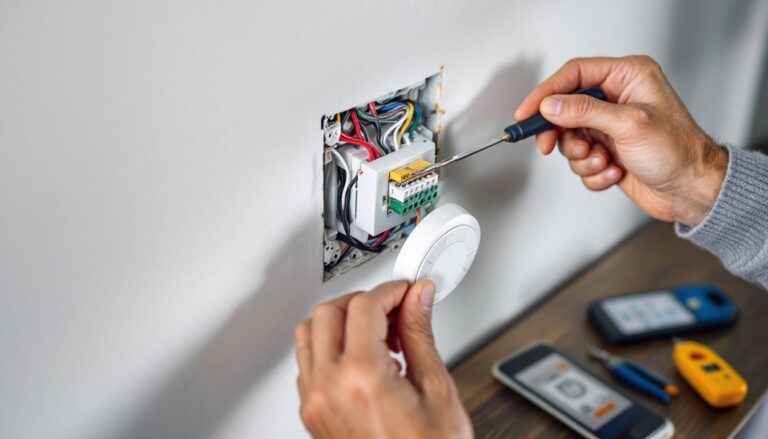
Installing a smart thermostat is one of the easiest home automation projects, assuming you have a C-wire. If you don’t, stop and hire a professional to run one, it’s not a DIY task without electrical experience.
Before you start, gather your tools and materials:
- Screwdriver (usually flathead for wire terminals)
- Wire strippers (if connecting new wires)
- Phone or camera to photograph existing wiring
- Smart thermostat and installation manual
- Needle-nose pliers (optional, helps with small wires)
Safety first. Turn off power to your HVAC system at the breaker panel, not just at the wall thermostat. Smart thermostats can retain voltage in capacitors, so wait five minutes before touching anything. If you’re uncomfortable working with electrical components, this is a legitimate reason to call a licensed electrician.
Step-by-step installation:
- Turn off the breaker controlling your HVAC system.
- Remove your old thermostat by carefully disconnecting wires from their terminals. Photograph each wire and its label before removal, this prevents reversed connections that could damage your HVAC unit.
- Strip about ¼ inch of insulation from each wire end if they’re damaged or corroded.
- Attach wires to the new thermostat’s terminal block in the same position. Most smart thermostats label terminals clearly (R, Y, W, G, C, etc.). Consult your manual if symbols differ from your old unit.
- Screw the new thermostat’s base plate securely to the wall, ensuring it sits level.
- Install the display unit by sliding it onto the base or snapping it into place, depending on the model.
- Restore power and follow the app setup wizard to connect to your Wi-Fi and Alexa account.
Common installation mistakes: Reversing polarity (connecting wires to wrong terminals) is the most damaging error. Double-check the manual’s wiring diagram against your specific HVAC system. Some furnace types require an order of operations during startup: installing the thermostat incorrectly can prevent the system from igniting safely.
Also, place your thermostat away from direct sunlight, heat sources, or air vents. Drafts and temperature spikes fool the sensor, causing unnecessary cycling. High placement (5–6 feet on the wall) reads ambient air temperature better than near the floor. According to guidance from smart home installation resources like smart thermostat installation best practices, a centrally located thermostat in a main living area works better than one near a bedroom or kitchen.
Once installed, test basic functions before fully configuring automations. Confirm the thermostat reaches your HVAC unit and cycles heating or cooling. Check that Alexa responds to voice commands. Then set your initial schedule and let it run for a week before tweaking. Real-world data beats guessing.
Conclusion
An Alexa-compatible smart thermostat is a practical investment that combines convenience with measurable energy savings. The installation is straightforward for most homes, the voice integration works reliably, and the ongoing cost drops your monthly utility bill. Focus on genuine compatibility, honest system requirements, and realistic expectations for savings. Skip the premium features unless they align with your specific home setup. Start simple, let the device learn your patterns, and refine automations over time. Within two heating seasons, you’ll recover the purchase cost, and enjoy the freedom of never manually adjusting temperature again. For more details on top models and features, comprehensive thermostat reviews offer side-by-side comparisons to match your needs.