If you’re tired of manually adjusting your thermostat or watching energy bills climb, a Trane smart thermostat might be the upgrade your home needs. Unlike traditional thermostats that sit on your wall doing one job, a Trane smart thermostat learns your schedule, adjusts temperatures automatically, and lets you control your heating and cooling from anywhere using your smartphone. For homeowners looking to cut energy costs and simplify climate management, Trane’s smart thermostat systems deliver practical intelligence without unnecessary complexity. Whether you’re building a connected home or just want better temperature control, understanding how these devices work, and whether one fits your setup, matters before you invest.
Table of Contents
ToggleKey Takeaways
- A Trane smart thermostat learns your schedule and automatically adjusts heating and cooling based on occupancy and weather, delivering 10 to 23 percent annual energy savings—roughly $100 to $300 per year for most homeowners.
- Trane smart thermostats include advanced features like geofencing, humidity control, real-time energy reporting, and predictive maintenance alerts that integrate seamlessly with your HVAC system through standard wiring.
- Remote control via the Trane Connect mobile app and voice commands through Alexa or Google Assistant let you manage your home’s climate from anywhere without needing a separate hub.
- Installation is a straightforward two-hour DIY project for handy homeowners, though hiring an HVAC technician for $100 to $200 eliminates the risk of miswiring and ensures proper setup.
- Break-even on a Trane smart thermostat typically occurs in two to three years, after which energy savings are pure profit, making it a financially sound investment for homes with standard HVAC systems.
What Is The Trane Smart Thermostat And How Does It Work?
A Trane smart thermostat is a connected climate control device that replaces your standard wall-mounted thermostat and communicates with your HVAC system through wireless technology. Unlike a basic programmable thermostat that runs on a fixed schedule you set once, a smart thermostat learns your patterns, adjusts automatically, and connects to your home’s Wi-Fi network.
The device uses built-in sensors to detect room temperature, humidity, and occupancy. When you’re away, it scales back heating or cooling. When it detects you’re heading home (via your smartphone location), it pre-conditions your space. Trane’s system integrates directly with compatible HVAC equipment, furnaces, air conditioners, and heat pumps, using standard HVAC wiring, so you’re not replacing your whole system.
Internally, the thermostat runs algorithms that balance comfort with efficiency. It tracks outdoor temperature, weather forecasts, and your usage patterns to predict what you’ll need before you ask for it. The device communicates with Trane’s cloud servers to pull updates, store data, and let you access controls remotely. Installation typically involves turning off power at your breaker, disconnecting the old thermostat, and wiring the new one, a task many homeowners handle themselves, though hiring an HVAC technician removes guesswork.
Key Features That Set Trane Smart Thermostats Apart
Trane smart thermostats pack several features that differentiate them from generic smart home climate devices. Geofencing automatically triggers temperature adjustments when you leave or approach home, no manual override needed. The learning algorithm observes your behavior over two to three weeks and builds a custom schedule that anticipates your comfort needs.
Humidity control is a key advantage, especially in humid climates. The thermostat doesn’t just manage temperature: it regulates moisture levels to prevent mold growth and improve comfort, a feature that cheaper thermostats often skip. Real-time energy usage reporting shows exactly how much your heating and cooling cost each day, helping you spot inefficiencies and adjust habits.
Compatibility with Trane’s XR series HVAC systems unlocks advanced diagnostics. The thermostat can alert you to maintenance needs before equipment fails, potentially saving thousands in emergency repairs. Many models include a built-in humidity sensor and support for dual-fuel systems (furnace plus heat pump), making them flexible for homes with mixed heating setups.
Remote Control And Mobile App Integration
The Trane Connect mobile app lets you adjust temperature, view energy usage, and monitor system health from anywhere, at work, on vacation, or from the couch. Push notifications alert you to system issues, filter reminders, or extreme temperature events. Unlike some competitors, Trane’s app doesn’t require a separate hub if your thermostat connects directly to Wi-Fi.
Voice control works through Alexa and Google Assistant, so you can say “Hey Alexa, set the temperature to 72 degrees” instead of fumbling with your phone. The interface is straightforward, most users get comfortable with the app within a few minutes. Scheduling can be automated entirely or controlled manually depending on your preference, giving you flexibility without forcing complexity.
Energy Savings And Cost Benefits
The primary appeal of a Trane smart thermostat is reducing energy waste and, as a result, your utility bills. Studies show that homes using smart thermostats see average annual savings of 10 to 23 percent on heating and cooling costs, roughly $100 to $300 per year depending on your climate and current habits.
Unlike a programmable thermostat that runs on a fixed schedule regardless of whether anyone’s home, a smart thermostat reacts to actual occupancy and weather. On a 65-degree day in spring, it might not heat or cool at all. During a surprise cold snap, it adjusts preemptively. Over a heating season or cooling season, these micro-adjustments add up.
Real-world cost depends on your region’s energy rates, your home’s insulation, your HVAC system’s age, and how much you were wasting before. A home in Minnesota with poor insulation and a 15-year-old furnace will see bigger savings than a well-sealed house in a mild climate. The devices themselves cost $200 to $600 installed, so break-even typically occurs in two to three years for most homeowners, after which it’s pure savings.
Don’t expect a smart thermostat to offset poor insulation or a failed HVAC unit. It optimizes what you’ve got. If your house is drafty, sealing air leaks and upgrading insulation will yield far bigger returns than any thermostat.
Installation And Setup For Homeowners
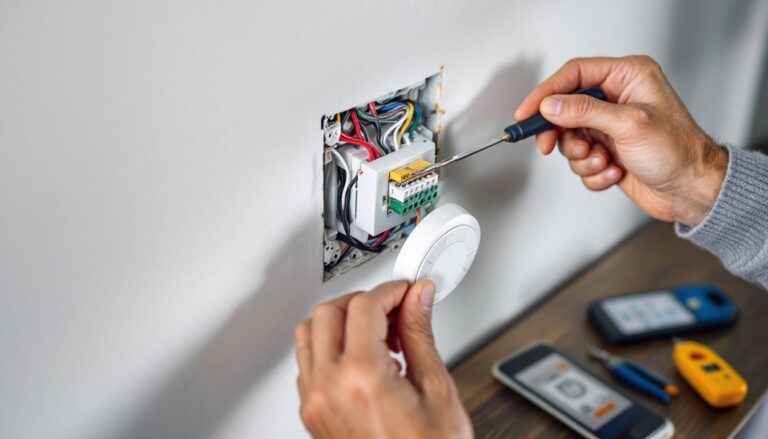
Installing a Trane smart thermostat is a two-hour DIY job for handy homeowners, though hiring an HVAC technician costs $100 to $200 and eliminates the risk of miswiring.
What you’ll need: A screwdriver (usually Phillips), a wire stripper, and the thermostat itself. Some homes have a C-wire (common, or 24-volt return) already installed: if yours doesn’t, you may need an adapter (sold separately, $25 to $50). The C-wire powers the thermostat continuously so it doesn’t drain batteries or lose settings.
Steps:
- Turn off power at your breaker box (critical for safety).
- Remove the old thermostat cover and note which wires connect where, take a photo.
- Disconnect the wires carefully and set aside the old unit.
- Screw the new mounting plate to the wall, ensuring it’s level.
- Strip about ¼ inch of insulation from each wire and insert them into the labeled terminals on the new thermostat.
- Restore power and follow the setup wizard on the device’s screen.
The tricky part: identifying wires correctly. HVAC systems use standard labels (R, W, Y, G, C), but older homes sometimes have non-standard color coding. If you’re unsure, a technician’s call is worth the cost. A misconnected thermostat won’t damage equipment, but it won’t work, and you’ll waste time troubleshooting.
After physical installation, download the Trane Connect app and pair it with your Wi-Fi network. Enter your zip code so the thermostat can access weather data. Set your initial temperature and occupancy schedule, then let the learning algorithm take over. Don’t expect perfect optimization for the first two weeks: the device needs time to observe your patterns.
Integration With Your Smart Home Ecosystem
A Trane smart thermostat doesn’t exist in isolation, it’s one node in a broader smart home network. If you already own Alexa, Google Home, or Apple HomeKit devices, the thermostat integrates seamlessly, letting voice commands control climate alongside lighting and locks.
Trane’s direct integration with Alexa and Google means no extra hub or adapter needed. Tell Alexa “I’m cold” and it raises the temperature. Ask Google Home to set the thermostat to a specific degree. These interactions feel natural if you’re already using voice commands elsewhere in your home.
For those building a more advanced system, the thermostat can trigger IFTTT (If This Then That) routines. Example: When you mark yourself “away” in your phone’s location services, the thermostat drops to 68 degrees and your smart lights turn off. When you approach home, the thermostat rises to 72 and lights turn on. These chains eliminate repetitive manual steps.
Interoperability with smart home platforms that rank high in 2026 reviews, such as those featured on sites reviewing top smart thermostats of 2026 and comprehensive smart thermostat comparisons, ensures long-term compatibility. Trane continues to update firmware and add integrations, so a thermostat you buy today remains relevant as your smart home grows.
One caveat: Not every smart home device plays nicely with every other. Before buying, confirm the thermostat supports the exact platforms you use. Most support Alexa and Google: HomeKit compatibility is less universal.
Conclusion
A Trane smart thermostat is a practical upgrade for homeowners serious about controlling energy costs and simplifying climate management. It learns your schedule, adjusts automatically, and lets you manage temperature from your phone, no complicated setup required. Installation is a straightforward DIY task or a quick contractor visit. Energy savings of 10 to 23 percent make it economically sound over a few years.
The real value emerges when you stop thinking of it as just a thermostat and see it as the hub for intelligent home climate control, learning, adapting, and integrating with the rest of your connected home. If you’re ready to replace guesswork with data, this device delivers.